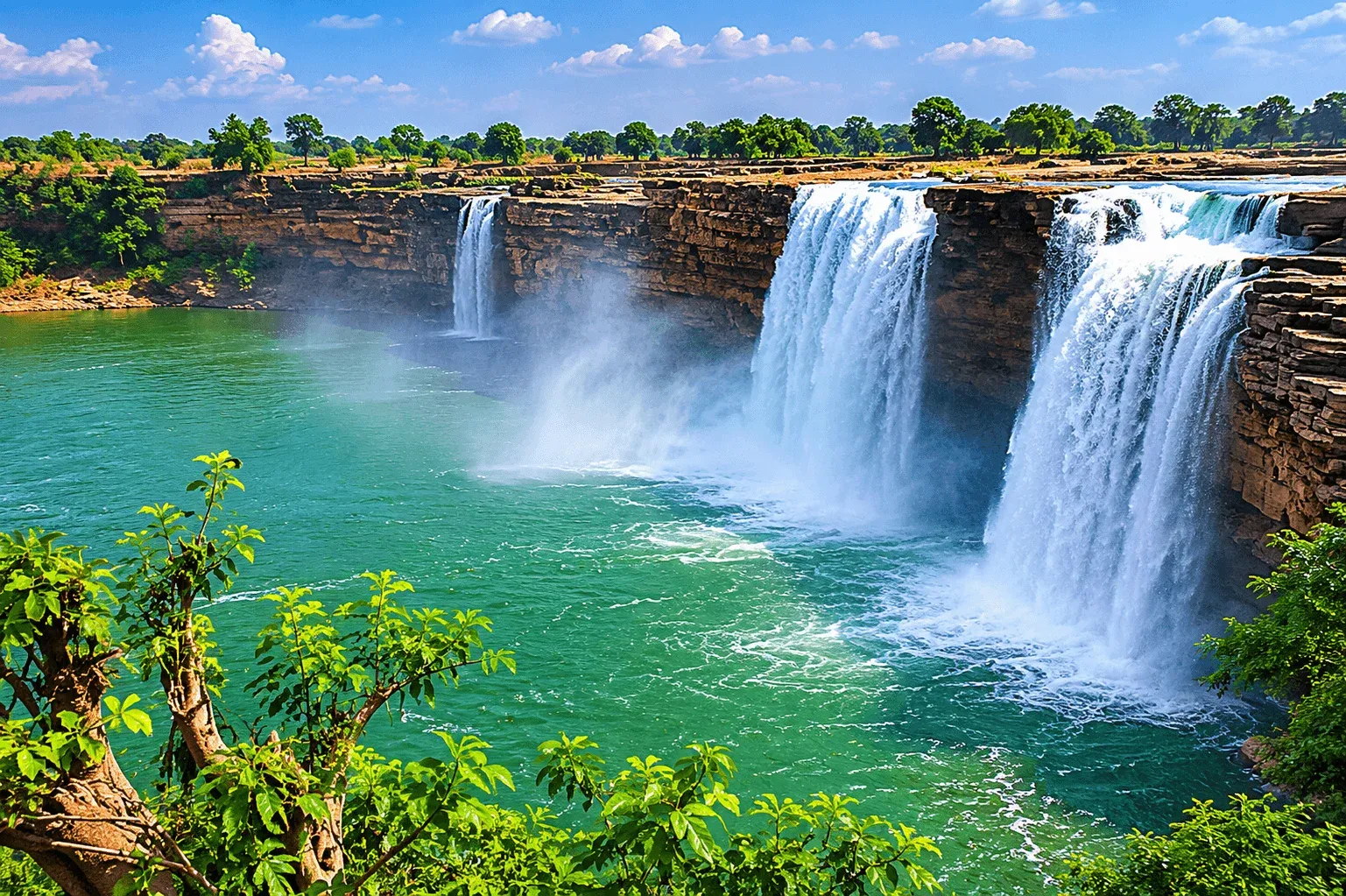
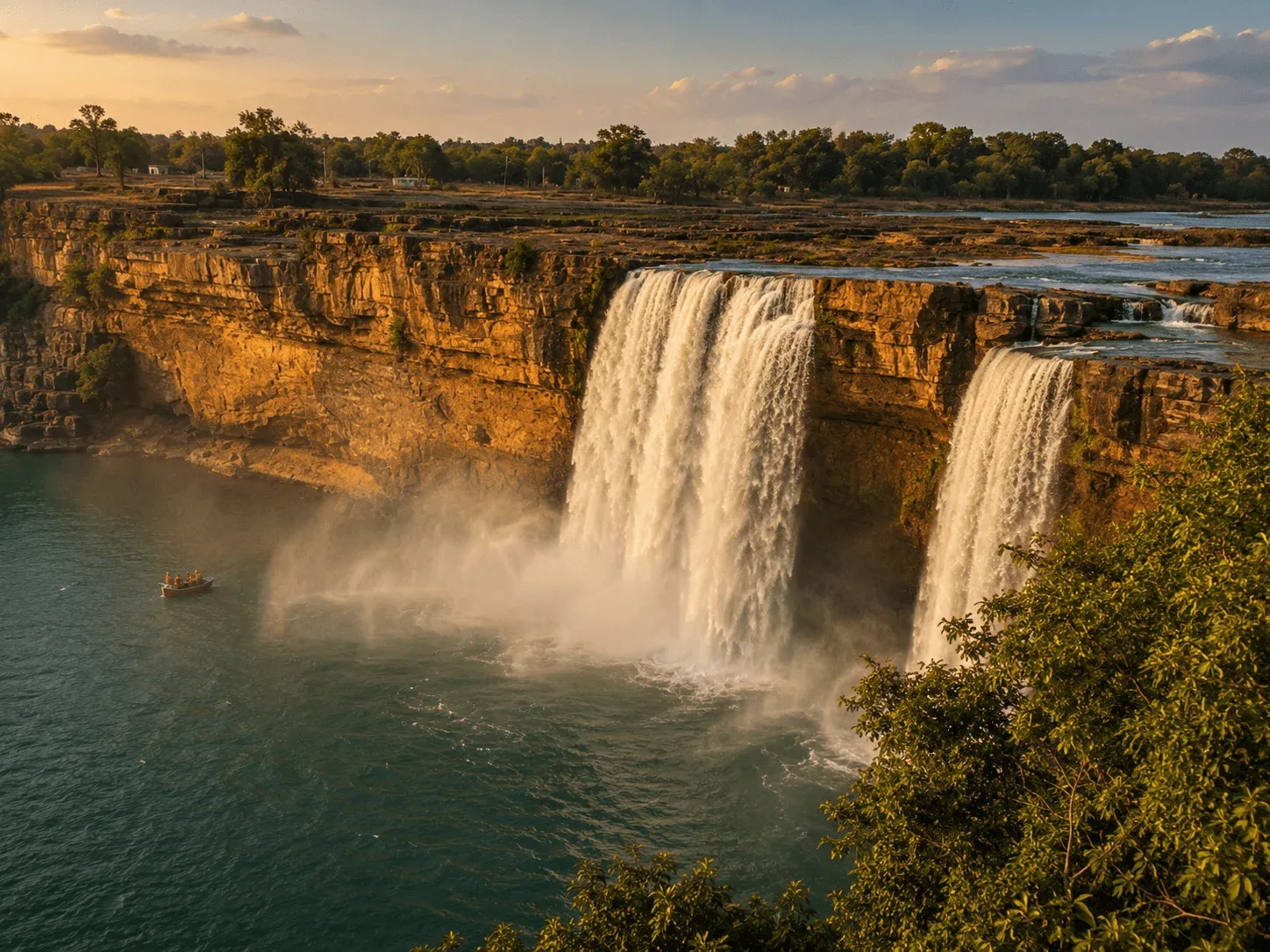
Stretching nearly 300 metres across during the monsoon season, Chitrakote Falls is the widest waterfall in India, carved by the Indravati River as it plunges around 29 metres into a dramatic horseshoe-shaped gorge deep in the forests of Bastar, Chhattisgarh. Unlike most waterfalls defined by height alone, it's the sheer breadth and raw force of Chitrakote that genuinely stops visitors in their tracks. The surrounding tribal heartland, dense sal forests, and the thundering water coming alive in peak rains make this one of central India's most unforgettable natural spectacles.
Chitrakote Falls
The Niagara of India — Where the Indravati River Takes a Breathtaking Leap
A Glimpse into the History of Chitrakote Falls
Origins on the Indravati
The Indravati River, which originates in the Kalahandi hills of Odisha, travels westward through dense Bastar forests before dramatically dropping at Chitrakote, about 38 km from Jagdalpur. The geological formation here — where the basalt plateau cliffs drop sharply — created the amphitheatre-like gorge that gives the waterfall its distinctive horseshoe shape, drawing comparisons to North America's Niagara Falls for centuries among local chroniclers and travellers.
The Bastar Kingdom and the Sacred River
The Bastar region, long ruled by the Kakatiyas and later the Bastar kings, has revered this stretch of the Indravati as sacred. The falls and surrounding forests were historically part of the vast tribal territory of the Gond and Halba communities, who considered the roaring waters a sign of the river goddess's power. Colonial-era British surveyors recorded the falls in the 19th century, describing it as one of the most spectacular natural sites in the Central Provinces.
Legends of the Indravati
Local folklore holds that the Indravati is no ordinary waterway — it is believed to have been the boundary of a divine forest that protected the region from misfortune. Tribal communities in Bastar still perform ritual ceremonies at the riverbanks near the falls during harvests and festivals, asking for the river's blessings. The dramatic beauty of the gorge has inspired oral storytelling traditions passed down for generations across Gond villages.
Significance of Chitrakote Falls
Chitrakote is the centrepiece of the Bastar tourism circuit and a symbol of Chhattisgarh's extraordinary natural wealth. Its unique horseshoe shape, combined with the way the Indravati divides into multiple channels over the cliff edge, creates a visual that changes dramatically with the seasons — a roaring, red-tinged torrent in monsoon and a quieter, turquoise-green cascade in winter. The falls play a critical ecological role, supporting the biodiversity of the Kanger Valley region and providing water to tribal communities downstream. For the Gondi people, the river and its falls hold deep spiritual significance tied to nature worship and ancestral traditions.
Festivals Near Chitrakote Falls
Bastar Dussehra (September–October)
Bastar Dussehra is not just a festival — it's a 75-day tribal celebration rooted in Gondi traditions, making it the world's longest Dussehra. Held in Jagdalpur, about 38 km from the falls, it draws visitors from across India who come to witness unique rituals, folk arts, and processions that have little in common with the Dussehra celebrated elsewhere in the country. It truly defines Bastar's cultural identity.
Madai Festival (Winter Months)
The Madai is a rotating tribal fair held in different villages across Bastar during winter. These fairs are the cultural heartbeat of the region — featuring traditional Gond music, tribal dance, barter markets, and the display of village deities. Timing your visit to Chitrakote alongside a local Madai fair gives you an authentic window into the tribal life of Chhattisgarh that few tourists experience.
The Seasonal Transformation — A Waterfall Like No Other
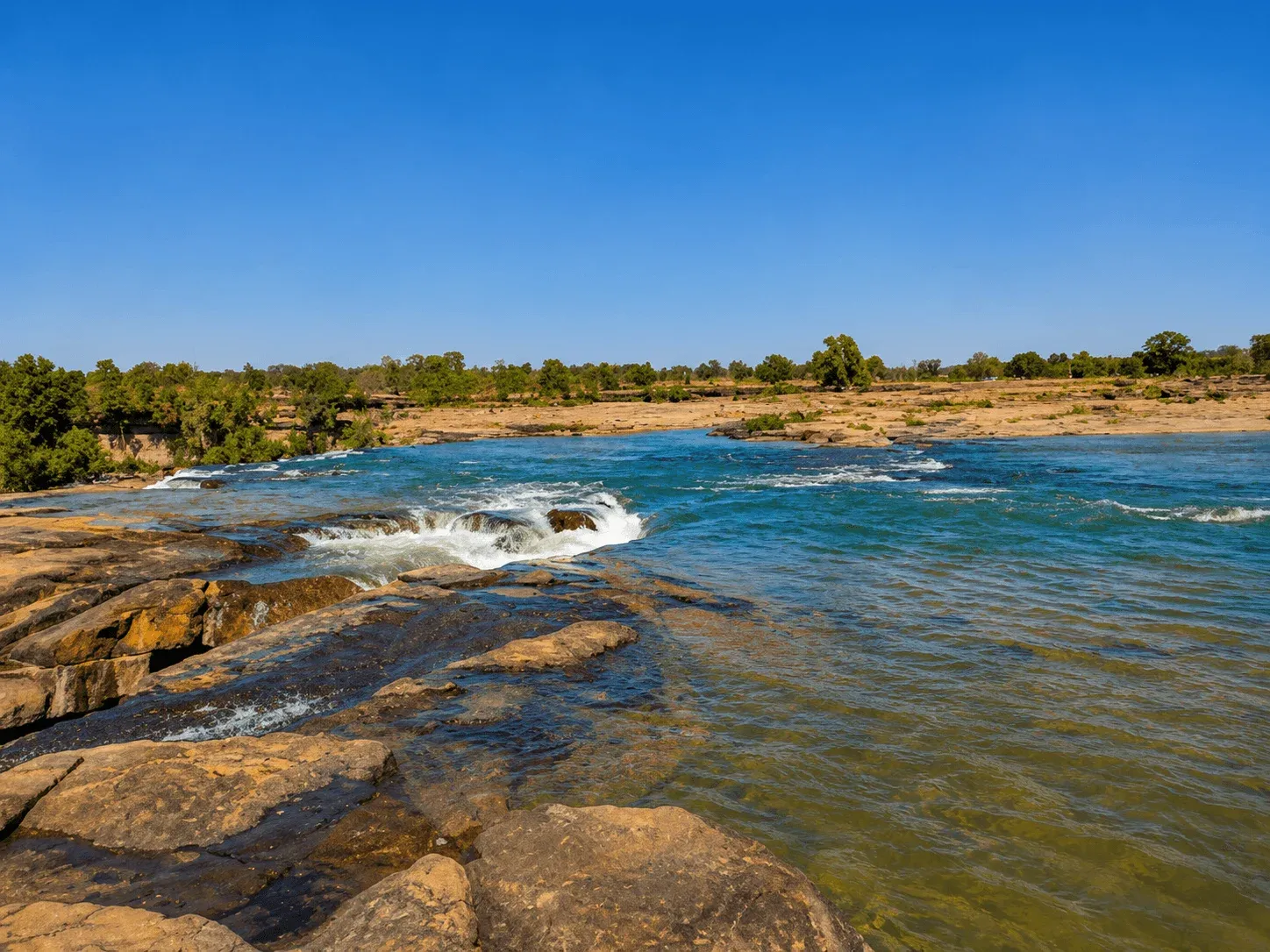
Chitrakote changes character dramatically depending on the time of year. During peak monsoon (July–September), the Indravati swells with red, silt-heavy floodwater and the falls can extend to nearly 300 metres wide, creating a thunderous curtain of water audible from over a kilometre away. By January–February, the water clears to a calm blue-green, the flow narrows considerably, and it becomes possible to walk on the rocky platforms at the base. Many travellers return in different seasons specifically to witness this transformation — both versions are equally memorable, just for entirely different reasons.
Travel Guide to Chitrakote Falls
How to Reach Chitrakote Falls
By Air: The closest airport is Jagdalpur Airport (JGB), about 42 km from the falls, with limited flights from Raipur. For broader connectivity, Swami Vivekananda Airport Raipur (RPR) is the main gateway — around 290 km away — from where taxis and buses run regularly to Jagdalpur.
By Train: Jagdalpur Railway Station (JDB) is the nearest railhead, approximately 38 km from the falls, with direct connections to Visakhapatnam and Raipur. From the station, hire a taxi or take a shared cab to the waterfall.
By Road: Chitrakote Falls sits on NH-30, making it easily accessible by road. State buses run between Jagdalpur and the falls. If driving from Raipur, the route via NH-30 through Kondagaon takes approximately 6–7 hours.
Best Time to Visit
The ideal time to witness Chitrakote at full power is during and just after the monsoon season — July to October — when the Indravati runs full and the falls reach their maximum width of nearly 300 metres. For comfort and clear water, November to February is perfect, with pleasant temperatures between 15–25°C and excellent road access.
Local Attractions
Tirathgarh Falls (~35 km): A stunning multi-tiered waterfall inside Kanger Valley National Park, quieter and more intimate than Chitrakote.
Kanger Valley National Park (~38 km): India's most densely forested park, home to wild gaur, leopards, and rare birds — also houses the Kutumsar, Kailash, and Dandak limestone caves.
Bastar Palace, Jagdalpur (~38 km): The historic seat of the Bastar royal family with a museum showcasing tribal art and royal artifacts.
Tips for Visitors
Visit Early: Arrive by 7–8 AM to catch morning light on the water and avoid daytime crowds during peak season (November–January).
Wear Light Clothes: The mist soaks you quickly — carry a change of clothes and wear quick-dry fabrics, especially during or after monsoon.
Respect Safety Barriers: During monsoon, do not cross barriers near the gorge edge. The currents here are deceptively strong even in shallower sections.
Best Photography Spot: The viewpoint on the left bank gives the widest panoramic view of the horseshoe shape and the full width of the falls.
Chitrakote Falls Location
Image Gallery